Fri May 16, 2008 2:48pm EDT
By Stephanie Nebehay
GENEVA (Reuters) - A special U.N. human rights investigator will visit the United States this month to probe racism, an issue that has forced its way into the race to secure the Democratic Party's presidential nomination.
The United Nations said Doudou Diene would meet federal and local officials, as well as lawmakers and judicial authorities during the May 19-June 6 visit.
"The special rapporteur will...gather first-hand information on issues related to racism, racial discrimination, xenophobia and related intolerance," a U.N. statement said on Friday.
His three-week visit, at U.S. government invitation, will cover eight cities -- Washington D.C., New York, Chicago, Omaha, Los Angeles, New Orleans, Miami and San Juan, Puerto Rico.
Race has become a central issue in the U.S. election cycle because Sen. Barack Obama, the frontrunner in the battle for the Democratic nomination battle, stands to become the country's first African American president.
His campaign has increased turnout among black voters but has also turned off some white voters in a country with a history of slavery and racial segregation.
Diene, a Senegalese lawyer who has served in the independent post since 2002, will report his findings to the U.N. Human Rights Council next year.
However, the United Nations has almost no clout when it comes to U.S. domestic affairs and is widely perceived by many as interfering. The United States is not among the 47 member states of the Geneva-based forum, but has observer status.
In a report last year he said Islamophobia had grown worldwide since the September 11 2001 attacks on the United States, carried out by al-Qaeda militants.
DEATH PENALTY
A U.N. panel which examined the U.S. record on racial discrimination last March urged the United States to halt racial profiling of Americans of Arab, Muslim and South Asian descent and to ensure immigrants and non-nationals are not mistreated.
It also said America should impose a moratorium on the death penalty and stop sentencing young offenders to life in prison until it can root out racial bias from its justice system.
Racial minorities were more likely than whites to be sentenced to death or to life without parole as juveniles, according to the U.N. Committee on the Elimination of Racial Discrimination. It monitors compliance with an international treaty which Washington ratified in 1994.
U.S. officials told the body, made up of 18 independent experts, that they were combating hate crimes such as displays of hangman's nooses and police brutality against minorities.
Some 800 racially motivated incidents against people perceived to be Arab, Muslim, Sikh or South Asian had been investigated since the September 11 attacks, they said at the time.
Substantial progress had been made over the years in addressing disparities in housing, education, employment and health care, according to a U.S. report submitted to the talks.
(Additional reporting by Matt Bigg in Atlanta; Editing by Jonathan Lynn and Jon Boyle)
--
Become a Friend of the Congo
Ph: 1-888-584-6510
http://friendsofthecongo.org/action/index.php
Saturday, May 17, 2008

Wednesday, May 14, 2008
NATUARL DISASTERS IN EAST ASIA: CHINA AND BURMA

For the past two weeks, natural disasters have completely disrupted the peace and killed thousands of people in Southeast Asia. In Myanmar, formerly known as Burma, the Nigoris Cyclone wiped out Yangon City and its surrounding areas, nearly leaving over 40,000 injured over 128,000 dead. Up to 2.5 million survivors were in an urgent need for food, water shelter, and medicine. A week after this devastation, a massive earthquake struck central China. As a result, over 15,000 people died. About 25,000 people are still trapped in fallen homes, schools, and cut roads. Both countries have been offered so much international aid from different nations. Initially, Burma restricted international help teams for more than a week. Burma's military tried to handle relief efforts on their own, but failed due to insufficient helicopters.
Today, China is making more progress than Burma. China has proven to better equipped in mobilizing massive rescue efforts. Chinese authorities have successfully sent thousands of troops and police officers to the epicenter. Unlike China, Burma’s crisis continues to worsen. The cyclone effects is perpetuating Burma’s water & air pollution, the spread of diseases, homelessness, and starvation. The UN predicts that the death toll will reach up 100,000 by the end of this month.
Tuesday, May 6, 2008
OPERATION RUDI NYUMBANI: KENYA’S FIRST STEP IN RECOVERY

On Monday, Kenya launched its first recovery stage, which is called Operation Rudi Nyumbani. Operation Rudi Nyumbani a.k.a. Operation Return Home is an Internally Displaced Person (IDP) resettlement, which authorized all refugees to return back to their homes after the post-election crisis. After the signing of the power-sharing agreement in February, both sides agreed that Kalenjin and Kikuyu ethnic groups must live in peace and harmony in order for Kenya to prosper.
During that Monday morning, buses and military trucks first headed to the Rift Valley to load thousands of refugees. Soldiers and police officers were sent as guard transporters to ensure that all IDPs were sent back to their homes with tight security. In addition, church leaders were sent as mediators. As a result, about 6,000 were returned back to Molo and 3,855 were taken back to Trans Nzola District.
Some survivors were thrilled to return home due to their horrible experience in the wet camps. Some stated that the wet camps were like prison. According to BBC News, Mary Wanbui, a Kenyan mother of five, quoted, "Look around this place, there are no toilets, bathrooms or anything else. it's been unbearable. For the last four months, we had to deal with crime, spread of diseases, and starvation.“
Although survivors are now authorized to return home, many people are still frustrated. Some people are returning back home to nothing. Others refused to leave the wet camps unless the government enforces improved security and compensation for all their losses. Unemployment and housing is the biggest loss for many survivors. Since the election crisis weakened the economy, Kenya now faces economic turmoil. Some of the top industries have suffered from high inflation and lost many workers. Many workers have went on strike and filed lawsuits. In terms of land property, homes or roof tops were burned down from repeated attacks. Homelessness has skyrocketed in rural areas. Many people are still reluctant from living with those people that have robbed them from their property, which had taken them generations to put together. Legislators now question on whether the government should rush the victims back to their homes is the most appropiate decision. Before returning home, the government should first listen to the grievances of those who were evicted. One victim quoted, “How can you go back to the same piece of land where your house was razed to the ground, your children hacked to death and your crops destroyed. Can you live in harmony with the very neighbours who destroyed your life?”
Sunday, May 4, 2008
OBAMA BEATS CLINTON IN GUAM DEMOCRATIC PRESIDENTIAL CAUCUS

Senator Barack Obama defeated Senator Hilary Clinton by seven votes on Saturday in Guam's Presidential Caucus.
According to the latest results, Obama won 2,269 votes, which is 50.1 percent. This places his total delegate votes at 1,736 delegates. Clinton finished with 2,257 votes or 49.9 percent. She currently has a total of 1,599 delegates.
Overrall, the total count was more than 4,500 ballots. Each candidate only earned two delegates. Both candidates did not campaign in Guam. However, both Obama and Clinton promised Guamanians better health care plans. According to Pacific News, Obama stated during a phone interview that he would " support the rexamination of the $5.4 million Medicaid spending limited imposed on the terroritory and promise more medical providers. "
Also, Obama said to his voters that during his time with a U.S. military unit from Guam on a trip to Africa that his Hawai'i roots make him "especially sensitive" to the needs of islanders.
Thursday, May 1, 2008
PRESIDENT RAUL CASTRO AUTHORIZES CELL PHONES IN CUBA

Havanna, Cuba- On Friday, President Raul Castro announced that Cubans are now authorized cell phone services. This is the first official change that shows that Castro's 76-year old regime is willing to lift a major restriction.
The next day, hundreds of Cubans brought cellular phones at local states-owned telephone offices. Before this week, only top government officials, foreigners, and foreign employees were allowed to use cell phones. Now, ordinary local people can purchase cheap pre-paid cellular phone plans. Since 1991, Empresa de Telecomunicaciones de Cuba S.A.(ETECSA) have only profited from limited customers. Now, ETESCSA are thrilled to work with more customers.
Also, Cubans are now allowed to buy DVD players, computers, and other electronic goods. However, ordinary people are still limited to internet access and home ownership.
President's Raul Castro new decision questions the Cuban government. Could this be the first step in completely revoluctizing Cuba's restrictive system. Already, the people of Cuba are excited for this new small freedom and hoping this could be a way of improving their lives.
Monday, April 14, 2008
When White Folks Take the Lead Black Folks Will Follow
 The largest human scourge on the face of the earth since World War II is the almost six million dead Black people in the Congo since 1996. Half of the dead are Black children five years old and younger. In addition, hundreds of thousands of women have been violently raped as a weapon of war. The United Nations says the conflict in the Congo is the deadliest in the world since World War II. Most of the deaths in the Congo occurred as a result of conflict related causes such as starvation, pneumonia, diarrhea and other preventable diseases.
The conflict arose in the Congo as a result of invasions by her neighbors, Rwanda and Uganda, first in 1996 and again in 1998. Both regimes are client states of the United States and their invasions were fully backed by the United States, Great Britain and international institutions such as the World Bank. American and Great Britain taxpayer dollars played a role in financing the invasions and subsequent human carnage, which continues to this day where 45,000 Congolese continue to die each month.
One would think all this has happened on another planet. At the root of the silence around this issue is the devaluing of Black bodies by both Black and White people alike. What is bewildering however, is how Black people in general and Black leaders and thinkers in particular do not see it in their interest to speak out against such carnage, especially when United States policy has contributed to the devastation in Africa’s most critical country.
Although our leaders often hold up Dr. King as a model leader who said, “Injustice anywhere is a threat to justice everywhere,” Black leaders are not speaking out forcefully against the injustices in the Congo. Our scholars love to think they are the next W.E.B. DuBois but DuBois was a staunch Pan Africanist and intimately involved in what transpired in the African world. When it comes to Black folks of our age, their thinking appears to stop at the borders of the United States, even though we are living in the Internet age at a time when the world is more integrated than ever and what happens outside of one’s border has implications on a global scale.
Moreover, there is an unfortunate failure of our leaders and best thinkers to see that what happens to Black people throughout the world, especially in Africa, has an effect on what happens to Black people in America. If Black people are devalued in Africa, they will be devalued in America. The results are different but the implications are the same nonetheless. Devaluing of Black people in Africa results in mass death because of the continent's fragile societies. Devaluing of Blacks in America results in slow government action while grandmothers are stranded on roofs without food or water as a result of natural disasters such as Katrina. One would think that at the very least, self-interest would dictate that Black folks speak out the loudest, particularly when spectacular profits are made by American and other Western corporations in the midst of vast human suffering and carnage in the Congo.
Unfortunately, due to the stage of development of our leaders and thinkers, it wont be until White people start to say more about the greatest horror at the dawn of the 21st century that you will see our political, civil rights and other leaders and thinkers start to say something about this issue and offer prescriptions that will have been served up to them by White folks.
The ultimate reason for Congo being ravaged in the way it has in the past 12 years is a result of its enormous wealth. The Street.com dubbed it the Democratic Republic of Buried Treasure. Its natural wealth has been estimated to be equivalent to the GNP of the United States and the European Union combined. The central question in the Congo is who is going to control Congo’s wealth and profit from it; the Congolese or Western corporations? Congo is endowed with diamonds, gold, zinc, iron, timber, copper (used in our kitchen appliances and wiring in our homes and cars), niobium (key to the LCD panels in our computers and flat screen televisions), coltan (key to our cell phones, video games, air bags and braking systems in our cars, and many electronic devices), cobalt (key for jet engines, aerospace industry, United States military and central to the batteries in our cell phones, lap tops, and electric automobiles), and tin (key to the mother boards in our computers). Companies such as Microsoft, Panasonic, Nokia, Motorola, Hitachi, Cabot, Kemet, Eagle Wings, OM Group, H.C. Starck and many others benefit from Congo’s mineral resources that feed the devices that we all use in our daily lives. Yet we are silent while Black people continue to die on a Biblical scale. Instead of Congo being the economic engine for the development of Africa, it serves as a millstone around the continent’s neck.
Raising our voices can save lives and offer hope to our brothers and sisters fighting for human dignity. It does not cost us anything to say something.
Maurice Carney
Friends of the Congo
friends@friendsofthecongo.org
Wednesday, April 9, 2008
Zimbabwe Faces An Uproar From Post Elections

April 27, 2008 - Many voters fear the outcome of the 2008 Zimbabwe's Presidential Elections. For over 28 years, Former President Robert Mugabe's and the ZANU-PF party have ruled Zimbabwe. As a result, the country has suffered from economic and political turmoil. His opponent, Morgan Tsvangirai and his party, the Movement for Democratic Change (MDC) wanted to put a end to the corruption by running up against the ZANU-PF party. After waiting for a week for the 2008 election results, the opposionist party and the voters became very concerned that there were no announcements. Presidential candidate, Tsvangirai, believed that Mugabe strategically planned to delay the results. The following week, Tsvangirai and MDG party issued a complaint to the court as a way to force out the results of the March 29 election. Tsvangirai announced that he is not suprised that President Mugabe would try to use a presidential runoff vote to reverse its defeat in elections.
On Sunday, a recount of votes alledgely confirmed that Morgan Tsvangirai party won full control of the parliment. According to tally results, the Zimbabewan Sunday newspaper claimed that the election authorities confirmed that Tsvangirai won the majority. However, Zimbabwe election authorities will not reveal the results until later on this week.
The Zimbabwe Electoral Commission called for a regional meeting with both parties to discuss the post-election crisis. Before the new results are released to the public, both parties will be able to scrutinze the entire recount.
At the same time, violent uprises continues to spread riots. Hundreds of MDG supports have been attacked and burned out of their homes. About 250 law enforcement officers raided MDG party's headquarters in Harare. Several people have suffered from head injuries. Only 10 have been murdered.
The 2008 Zimbabwe Elections created a huge international outcry. Tsvangirai and his party called for the United Nations for further investigation. So far, Britain urged the UN Security Council to take part in the human rights abuse and to urged Mugabe to resign.
President Bush Celebrates NATO's Newest Members

President George W. Bush greets the crowd at Zagreb's St.
Mark Square, Croatia, 05 Apr 2008
April 5, 2008 - President Bush celebrates Croatia and Albania for joining NATO at the 2008 Military Alliance Summit in Bucharest, Romania. On Friday, Bush publicly announced his rejoice for NATO’s newest members. Bush stated that NATO's newest members are significant in spreading Democracy and strengthening Western military protection. Bush promised that NATO would stand by Croatia and Albania if anyone endangered them.
Bush strongly believes the newest members deserve membership because they have continuously shown great contributions to NATO. Croatia and Albania have been very cooperative in NATO's support regarding the advancement of freedom and democracy while facing current political challenges. Their efforts in sending troops to Iraq and Afghanastan demostrated their profound committment to peace and security. Also, Craotia and Albania accession to NATO is marked as the sixth round of enlargement in NATO’s history. In 2004, Bulgaria, Estonia, Latvia, Lithuania, Romania, Slovenia and Slovakia were admitted.
In the near future, Bush hopes for more southern European countries will join NATO, in particularly Macedonia. Currently, Macedonia has been not extended membership due to not meeting the criteria in the Membership Action Plan because of their difficulty in political reforms. In order for NATO to reconsider membership, Macedonia must settle their dispute with neighboring country, Greece. However, NATO is still determine to strategically help Macedonia to seek NATO membership.
Tuesday, March 25, 2008
Tibet Riots Raises Concern in China

March 23- Authorities closed down Tibet's capital and sent in additional troops for rigid control after a violent uprise occurred from an Anti-Chinese protest group.
On Monday morning, the Tibetan exile group also known as the Buddhist Monks, launched deadly riots against Chinese rule. The Chinese government accused the exiled spiritual leader, Dalai Lama, for plotting these violent riots. Allegedly, Dalai has been identified as the current leader and supporter of 3 decades of combative persuasion in gaining Tibet's independence.
As the anti-Chinese movement continues to spread, protest groups are actively burning down government offices, cars, shops, hotels, schools, and homes. According to CNN news, Foreign Ministry spokesman, Qin Gang, he has demanded that foreign tourists must restrict their travels and to ut of westerremain in Gansu and Sichuan provinces. Many tourists that were banned from the capital, described the area to be very hostile because of the constant gun shots. 30 were reported killed and 325 were injured that day. On Wednesday, local police arrested 24 protestors in Xiahe.
The following day, Chinese authorities immediately closed down the city. The main streets are empty and reinforced with military and law enforcement officials. Streets are completely occupied with military blockades which are used to keep Tibetans in and reporters out of the area. Even at airports, Tibetan police turned away foreigners at the check-in counters.
These riots have no doubt caused critics to judge the state of China's affairs and the human rights issues surrounding the Bejing Olympics. The Olympics are scheduled to kickoff in two weeks. There have been rumors that possible boycotts may occur during the opening ceremony. To add insult to injury, the Chinese government is already being scrutinized for their involvement in the Darfur Movement.
The following day, Chinese authorities immediately closed down the city. The main streets are empty and reinforced with military and law enforcement officials. Streets are completely occupied with military blockades which are used to keep Tibetans in and reporters out of the area. Even at airports, Tibetan police turned away foreigners at the check-in counters.
These riots have no doubt caused critics to judge the state of China's affairs and the human rights issues surrounding the Bejing Olympics. The Olympics are scheduled to kickoff in two weeks. There have been rumors that possible boycotts may occur during the opening ceremony. To add insult to injury, the Chinese government is already being scrutinized for their involvement in the Darfur Movement.
Tuesday, March 4, 2008
International Women's Day: Do We Value Black Women Less on the African Contient?
 Congolese Women Appeal to the Global Community
The Congo is located in the heart of Africa, bordered by nine countries and boasts a land mass comparable to Western Europe, with a population of 65 million people. It is enormously endowed with vast natural wealth ranging from diamonds, gold, copper, cobalt, uranium, coltan to timber, tin and fresh water.
Congo is also the place of the deadliest conflict since World Ward II, which has claimed at least 5.4 million lives in the past decade, half of the dead, children 5 years old and younger. Approximately, 45,000 Congolese continue to die each month. The overwhelming majority of the deaths have been a result of treatable causes such as malaria, diarrhea, pneumonia and malnutrition.
One of the most shocking results of the conflict is the rape of hundreds of thousands of Congolese women and children. Children as young as 3 years old and women as old as 70, have been raped and sexually mutilated.
Two types of rapes are occurring in the Congo; the rape of the women and the children and the rape of the land. The two are inextricably linked as the scramble to control Congo’s natural wealth fuels the violence and mass rape.
As a global community of conscience, which stands for human dignity and the belief that it is the responsibility of each of us to protect the vulnerable among us; in this respect, we call for the following:
- Stop the Rapes in the Congo
- Stand in Solidarity with the women and children of the Congo
- Cease the Pillaging of Congo’s mineral wealth
- Appeal for Justice for the Congolese people
- Prevent intervention by Congo's neighbor countries
- Break the Silence in the corporate media about the source of the Congo conflict
- Protect the vulnerable populations in the Congo
- Acknowledge the Congo crisis as a world crisis
- Restore and Repair the lives of the women and children
- Join in Solidarity with women and children who are victims of war throughout the globe
Find out more about women in the Congo and their remarkable battle for human dignity.
Maurice Carney
Executive Director
Friends of the Congo
Wednesday, February 27, 2008
How Will China Handle the Spread of "Genocide Olympics"?
As time progresses, The Darfur crisis remains to be one of the world’s worst humanitarian crisises. Hundreds of thousands have died or suffered from war crimes, starvation, and disease. Sudan’s government bears the bulk of the responsibility for these ongoing crimes by denying UN intervention. Today, more people are reaching out to China for diplomatic assistance. A growing number of activists argued that Darfur needs China to forcefully use its power and influence to help end the massive violence by imposing sanctions on trade. However, China continues to show little effort. For the past two years, the Bush Administration accused China of failing to use its power and influence as they refused to cease arms control trade. President Bush argued that China’s leadership is crucial because they have the ability to pressure Khantoum to allow UN peacekeeping operations. Instead, China refrained from being the diplomatic protector, by not voting for the UN Security Council Resolution 1706, which authorized UN peacekeeping operations in Sudan.
In January of 2008, President Hu Jiantou announced that China will remain close ties with Sudan. President Hu Jiantou argued that China needs to acquire foreign oil reserves in order to balance their energy consumption. China has invested billions of dollars in Sudan’s oil industry and is the major weapon supplier. These weapon deliveries include ammunition, tanks, helicopters, fighter aircraft, and antitank mines. The constant exchange of weapons is contributing to the 200,000 lives lost and the 2.5 million people that have been driven from their homes.
Beijing's determination to keep the 2008 Olympic Games from being tainted provoked the U.S. and many nongovernmental organizations to publicize China’s failure to take action. In May of 2007, 108 U.S. House of Representative members sent a warning that the Beijing Olympics could be endangered if China does not modify its trade policies with Sudan. Today, Mia Farrow started a campaign called, “Genocide Olympics,” which aimed to boycott the Beijing Olympics. Initially, Farrow called on corporate sponsors and celebrities to publicly denounce China’s actions in Sudan. Film Director, Steven Spielberg joined the campaign, which is very significant because he is the artistic adviser to China for the Olympic Games. Spielberg sent a rebuttal letter to President Hu Jiantoo, accusing China for being partially responsible for the killings in Darfur and asking the government to bring an end to the human suffering there.
In January of 2008, President Hu Jiantou announced that China will remain close ties with Sudan. President Hu Jiantou argued that China needs to acquire foreign oil reserves in order to balance their energy consumption. China has invested billions of dollars in Sudan’s oil industry and is the major weapon supplier. These weapon deliveries include ammunition, tanks, helicopters, fighter aircraft, and antitank mines. The constant exchange of weapons is contributing to the 200,000 lives lost and the 2.5 million people that have been driven from their homes.
Beijing's determination to keep the 2008 Olympic Games from being tainted provoked the U.S. and many nongovernmental organizations to publicize China’s failure to take action. In May of 2007, 108 U.S. House of Representative members sent a warning that the Beijing Olympics could be endangered if China does not modify its trade policies with Sudan. Today, Mia Farrow started a campaign called, “Genocide Olympics,” which aimed to boycott the Beijing Olympics. Initially, Farrow called on corporate sponsors and celebrities to publicly denounce China’s actions in Sudan. Film Director, Steven Spielberg joined the campaign, which is very significant because he is the artistic adviser to China for the Olympic Games. Spielberg sent a rebuttal letter to President Hu Jiantoo, accusing China for being partially responsible for the killings in Darfur and asking the government to bring an end to the human suffering there.
Tuesday, February 19, 2008
President Bush Calls for an End to Darfur Conflict
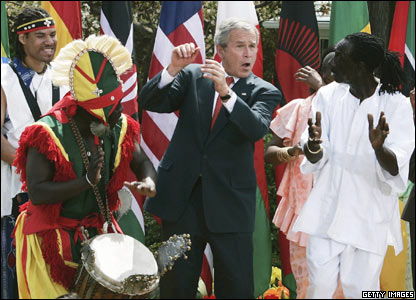
President Bush gave a speech in Kigali, Rwanda this week, calling for nations to increase their efforts to end the conflict in the Sudan's western Darfur region "once and for all".
The president has stated that he is frustrated that other nations have not been willing to work equally hard to end the conflict.
"The Rwanda people know the horrors of genocide," Bush said. "My message to other nations is: 'Join with the president and help us get this problem solved once and for all.' And we will help."
Shortly before his speech, President Bush met with Rwanda President Paul Kagame.
Rwanda was the first nation to deploy peacekeepers to the Darfur region in a joint mission. The U.S. has given $17 million dollars and trained 7,000 troops to help with the conflict. It has also committed $100 million in funding to help train peace keepers to the area.
"I'm not comfortable with how quickly the response has been," said President Bush.
Bush gave his speech after a visit to the Kigali Memorial Center. The Center discusses the genocide in 1994 that left over 800,000 Tutsis killed. Many were shot and hacked to death.
"It's a moving place. It can't help but shake your emotions to their very foundation," Bush said. "There is evil in the world and evil must be confronted."
With President Kagame next to him, President Bush described his reaction to what he'd seen, "I just can't imagine what it would have been like to be a citizen who lived in such horrors, and then had to, you know, gather themselves up and try to live a hopeful life," he said.
President Bush also discussed The Congo with President Kagame. Rwanda invaded The Congo in 1998, leading to the death of over 5.4 million people. Rwanda has been accused of plundering the resources of The Congo after the invasion.
Kagame and Bush spent a great deal of time discussing the peace accord after the war and ensuring its implementation.
"The most important thing is to get results for the agreement and that's what we discussed today, on how to help bring peace to this part of the world," Bush said.
Saturday, February 16, 2008
What Should President Bush Say About the Congo During His Trip to Africa?
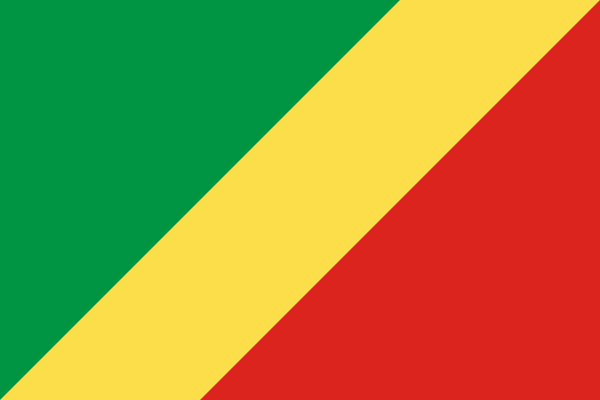
Submitted by Friends of the Congo
www.FriendsoftheCongo.org
Washington, DC - February 15, 2008 - As president George Bush travels to Africa, the world's attention will be focused on the countries that he visits; Rwanda is one of those countries. Rwanda and its leader Paul Kagame are deeply implicated in what the United Nations say is the deadliest conflict since World War Two. Rwanda's and Uganda's 1996 and 1998 invasions of the Democratic Republic of the Congo, which were backed and supported by the United States and other western powers unleashed untold human misery and suffering.
According to the International Rescue Committee, 5.4 million Congolese have died, 50 percent of which are children five years old or younger. Amnesty International has reported that tens of thousands of women have been raped, some victims as young as 2 years old and as old as 70 years. Medecins Sans Frontières (MSF) says the Congo conflict is one of the ten most underreported stories of 2007. In those fleeting moments when the conflict is reported, it is done without context and often presented as wanton killing by Africans perpetually doomed to committing insane acts of violence and atrocities without any mention of what fuels the conflict.
American, Canadian, and European corporations' pilfering of Congo's natural resources is inextricably linked to the heinous rapes and appalling deaths. Antonio Guterres, United Nations High Commissioner for Refugees reminded the world in his January 2008 interview with the Financial Times of London that "The international community has systematically looted the Democratic Republic of Congo (DRC) and we should not forget that."
A myriad of reports since 2001 has documented the pillaging of the Congo by neighboring countries and western corporations and its role in fueling the conflict in the Congo. To the chagrin of many human rights groups and people of conscience throughout the globe, western nations have refused to hold their corporations accountable and put the necessary pressure on their client states of Rwanda and Uganda to keep their hands off the Congo.
Congo's gold, diamonds, copper, cobalt, coltan, tin, chromium, germanium, nickel, and uranium are central to the functioning of many modern amenities such as cell phones, computers, electronic devices, our children's video game consoles, kitchen appliances, automobiles, airplanes, and numerous other devices. Its rainforest, often called the World's second lung, is central to the world's battle against climate change. Undoubtedly we in the West are indirectly benefiting from the pilfering and the widespread killing in the Congo.
President Bush has an opportunity to say and do a number of things that can make a positive difference in the Congo and the Great Lakes region of Africa.
1. Demand that Paul Kagame, a former Fort Leavenworth, Kansas military student, immediately cease his interference in the Congo.
2. Pressure Paul Kagame to open up democratic space in Rwanda and provide a path for the Hutu's in the Congo to return to Rwanda.
3. Call for a process of national reconciliation and justice throughout the entire Congo, not just in the east. Such reconciliation should institute a process where the victims of human rights abuses and atrocities are able to secure justice.
4. Call for U.S. and other western corporations who are poised to make spectacular profits in the midst of the rapes and killings to cease their pilfering of the Congo.
5. Declare that the natural wealth of the Congo belongs to and should benefit first and foremost the people of the Congo and not solely foreign multi-nationals.
Contact:
Carrie Crawford
202-584-6512
info@friendsofthecongo.org
Friday, February 8, 2008
Africa's Electricity Crisis Sustains Poverty
Once the sun goes down in Africa, about 75% of the population lives in a world of darkness. Day-to-day living conditions suffer from no electricity. Time-management is crucial because people are unable to cook or clean and simply forced to sleep. Electricity is one of the top most expensive necessities in Africa, and many residents are denied this basic staple. Typically, public facilities, such as hospitals and schools can only afford electricity for fifteen days out of the month. According to the World Bank News Broadcast, Sub-Saharan Africans use seven times less electric power than people in high income countries. Up to 250 million Africans have no easy access to electricity and are left to use kerosene lamps or burning fire.
South Africa’s energy crisis is a huge issue. The country consumes most of the electricity in the region. As a result of the shortage, the power supply has been unable to meet with growing consumption. During the winter seasons, South Africa suffered from constant blackouts due to the high demand of heater usage. Old electrical infrastructure is the main cause of the common blackouts. There are not enough modern power plants to provide electricity. Low use of energy slows down Africa’s economic growth and mitigates its ability to reach its long-term goals of poverty reduction. Africa needs more energy access, which will alleviate poverty by increasing local commerce, creating more jobs, enhancing incomes, and improving safety.
Low electrical access has turned away many foreign investors, donors, and tourists. In Tanzania, a non-profit organization from England donated computers to many school systems. Unfornately, low power hindered the students' ability to take advantage of the computers. Furthermore, Tanzania’s local power company has no desire to help provide the electricity in public schools. It has been over ten years since the company has actually visited the school system.
Today, a growing number of international groups have been involved in addressing Africa’s power shortage by providing reliable and commercial electricity. In 2007, the World Bank Group and the International Finance Corporation initiated a new project called Lightening Africa, which aims to provide more access to affordable modern lightening services. In this project, the goal is to provide more local entrepreneurs and business the chance to sell low cost, high quality lightening products. More than a dozen sponsor groups have provided funding for new affordable lightening advancements, such as compact fluorescent light bulbs (CFLs) and light emitting diodes(LEDs), which is guaranteed to provide durable, portable, and clean technology.
South Africa’s energy crisis is a huge issue. The country consumes most of the electricity in the region. As a result of the shortage, the power supply has been unable to meet with growing consumption. During the winter seasons, South Africa suffered from constant blackouts due to the high demand of heater usage. Old electrical infrastructure is the main cause of the common blackouts. There are not enough modern power plants to provide electricity. Low use of energy slows down Africa’s economic growth and mitigates its ability to reach its long-term goals of poverty reduction. Africa needs more energy access, which will alleviate poverty by increasing local commerce, creating more jobs, enhancing incomes, and improving safety.
Low electrical access has turned away many foreign investors, donors, and tourists. In Tanzania, a non-profit organization from England donated computers to many school systems. Unfornately, low power hindered the students' ability to take advantage of the computers. Furthermore, Tanzania’s local power company has no desire to help provide the electricity in public schools. It has been over ten years since the company has actually visited the school system.
Today, a growing number of international groups have been involved in addressing Africa’s power shortage by providing reliable and commercial electricity. In 2007, the World Bank Group and the International Finance Corporation initiated a new project called Lightening Africa, which aims to provide more access to affordable modern lightening services. In this project, the goal is to provide more local entrepreneurs and business the chance to sell low cost, high quality lightening products. More than a dozen sponsor groups have provided funding for new affordable lightening advancements, such as compact fluorescent light bulbs (CFLs) and light emitting diodes(LEDs), which is guaranteed to provide durable, portable, and clean technology.
Sunday, February 3, 2008
The United Nations Digs Deeper Into the Kenyan Crisis

The President of the African Development Bank, Donald Kaberuka, recently held a series of meetings with African Heads of State during the 10th summit of the African Union, held in Addis Ababa, Ethiopia.
During the meetings, Mr. Kaberuka stressed the importance of ending the crisis in Kenya and not losing the gains made over the past several years.
During his meetings with Kenyan President Mwai Kibaki, Mr. Kaberuka suggested ways the bank could help end the crisis. In a joint statement with the World Bank, The African Development Bank stated the following:
"By our early estimates, the current situation could drive 2 million Kenyans into poverty, reversing the gains made over the last few years".
Both institutions went further, saying that they "support efforts by Mr. Kofi Annan and his team, under the African Union initiative, to bring all parties together to make credible and visible progress toward quick and peaceful reconciliation."
Additionally, UN Secretary-General, Ban Ki-Moon, was in Kenya this week to put energy behind the efforts of Kofi Annan and his mediation talks.
Mr Ban made his appearance as France called for the UN Security Council to get more deeply involved in the Kenyan Crisis. Thus far, the crisis has left 850 dead and over 300,000 homeless.
Mr. Ban's message to Mwai Kibaki, Raila Odinga and the Kenyan people was simple: "It has to stop." His message was delivered in Nairobi and repeated several times.
At the same time Mr. Ban was speaking in Nairobi, Canadian High Commissioner to Kenya, Ross Hynes, was also getting involved Mr. Hynes stated that Canada can no longer engage in "business as usual" with the Kenyan government. He claimed that Canada would refuse contact with Kenyan leaders accused of disabling democratic institutions. He also said that they may even deny them visas to his country.
Sunday, January 27, 2008
Kenya Violence Continues: Kofi Annan Meets with Odinga

In Nairobi, violence has continued to spread. Kofi Annan called for peace talks on Sunday between Kenya's feuding parties. The death toll for the past 3 days has crossed the 100 mark.
Nine people were killed in a slum district of Naivasha, raising the death toll in the area to 116.
In his sixth day in the region, former UN Chief Kofi Annan met in Nairobi with opposition leader Raila Odinga. Odinga claims that he was robbed in the presidential election.
Musalia Mudavadi, a member of Odinga's Orange Party Movement, said that some progress is being made toward having talks between Odinga and President Mwai Kibaki.
"Our side and the other side will appoint three negotiators and an additional person as a liaison person," Mudavadi said.
Since the election, which has received a great deal of international scrutiny, over 850 people have been killed. Over a quarter million people have been displaced from their homes.
Some say that old ethnic and land disputes have fueled some of the killing as well. Kibaki's tribe, the Kikuyu, have ben clashing with the Luo and Kalenjin groups that tend to support Odinga.
The international community remains concerned.
Thursday, January 24, 2008
William Ruto Responsible for Kenyan Violence: Odinga and Kibaki Must Take Action

PLEASE NOTE: This statement does NOT reflect the opinions of YourBlackWorld. If any individual or organization has a conflicting viewpoint, we encourage you to submit your essay or statement to us via email at info@yourblackworld.com. Please make sure that any submission is free of typos and well-written. We do not guarantee publication, but all work will be considered. We respect the seriousness of the events going on in Kenya and encourage a productive and enlightening dialogue.
This is a statement from People Foundation, Inc, California. Over the last couple of days, we have seen Hon. Raila Odinga come to terms with the escalating loss of human lives in our country, and has consistently softened his stand towards a peaceful resolution to the current crisis. One thing that has aroused our curiosity is the posture that William Ruto has taken in the whole reconciliation process. We got concerned and embarked on a quick investigative research to unearth what is driving Ruto not to explore peaceful resolution to the social-political crisis going on in our country.
Let the truth be known that William Ruto is the man sponsoring the genocide operations going in Rift Valley through the Karamajong Guerilla Fighters, a militia with operations similar to the old known militia "the Shiftas" that fought Moi in the 1980s. Reliable sources indicate that Karamojong Guerrilla Fighters arrived in city of Eldoret where they mercilessly massacred hundreds of innocent people including women and children.
Recently Ruto was reported to be out of Nairobi, and could not attend the meeting between Raila and Kalonzo. We have established that Ruto was in Eldoret meeting with the Karamojong Guerilla Fighters. Ruto knew that the only way ODM could have access to adequate firepower (KEG) was to engage the Karamojong Guerilla Fighter who are obviously known to possess insurmountable quantities of AK-47, Automatic Rifles and other sophisticated small arms. It is important to highlight the fact that Karamojong communities are cousins with the Luos, and therefore, it is the same militia that is killing people in Nyanza.
It is therefore imperative for the government of the day to take decisive and conclusive action against William Ruto, and the perpetrators of genocide. We cannot afford to see one more live lost. We are also asking Hon Raila Odinga to disassociate himself with William Ruto and speak for peace and return of the nation to normalcy. Who knows whether the judicial process could over turn the ECK decision, and see a re-run of the presidential elections?
Karamoja, the nomadic pastoralists of Northern Uganda and Kenya have traditionally raided each other's livestock, an activity that flows naturally from their cultural frameworks for life. During the raiding season, the raid is typically followed counter-raid with considerable loss of life. Ever since they became neighbors, raiding has gone on intermittently, not only between Karamojong and Pokot, but also between them and Jie, Dodoso, Turkana, Samburu, Marakwet, Sapiny ot Sabawot, and Bukusu.
Before 1970s, Karamoja was peaceful, pastoral and traditional, but the years according to Mirzeler & Young (2000) ushered in the new era of guns. The proliferation of automatic rifles (Leggett, 2000) has unequivocally infected the Karamojong culture with ills of modern AK-47 raids, which currently pose the single greatest risk to the security of the northern region. Mirzeler & Young (2000) write that there are over 40,000 AK-47 in Karamojong community, while Gray (2000) estimates that there are over 100,000 automatic rifles in Karamoja. Firearms are not novelties for the Karamojong, they have enculturated them with very little fuss, just like other Iron implements, all of which are acquired from foreigners. The Karamojongs have possessed firearms since 1870 when the colonial government licensed some, and there have always been at least a few illicit firearms.
The community started acquiring sophisticated guns in large quantities in the 1970s following the routing of President Idi Amin's army in Uganda by an alliance of Tanzanian People's Defense Force and Uganda exiles (Mburu, 2000). One known major source was the Moroto barracks which the fleeing Ugandan dictator abandoned intact thus allowing the Karamojong to help themselves to unlimited quantities of rifles, small arms and ammunitions.
William Ruto, knowing very well that in the context of the Turkana and Karamojong people that the current governments in Kenya and Uganda are part of the insecurity problem, has incited the Karamojongs and other communities to violence, and secretly engaged the Karamojong Guerilla Fighters to inflict fear and suffering among the people in protest of the outcome of the just concluded general elections. To this end, Ruto should be apprehended as an underworld warlord who incites ethnic communities to arm and commit genocide like what recently happened in the church campus in Eldoret.
For those who think the government should not act decisively and conclusively with William Ruto should read (Romans 13:4) .. for it is a minister of God to you for good. But if you do what is evil, be afraid; for it does not bear the sword for nothing; for it is a minister of God, an avenger who brings wrath on the one who practices evil.
People Foundation, Inc,
Social Transformation
Advocacy Group 775 River
Oaks Parkway
San Jose, CA 95136
Note: The Above comments do not represent the views of YourBlackWorld. To subscribe to YourBlackWorld.com, the top black news site in America, please click on the image below:

Thursday, January 10, 2008
Obama Helps With the Kenyan Crisis

Turns out that New Hampshire and Iowa were not the only areas on Obama's radar this week. In addition to working to win the primary in Iowa and place a close second in New Hampshire, Senator Barack Obama was also on the phone lines in Kenya dealing with the violence and turmoil in the country after recent elections.
Obama's father is from Kenya and he still has family there. Obama reached out to contact Kenyan opposition leader Raila Odinga by telephone and also hoped that he would have the chance to speak with Kenyan President Mwai Kibaki.
Although Kibaki was declared the winner of the election, allegations of vote-rigging have marred the election results. The allegations have come from both inside Kenya and in the international community. As a result of the election problems, Kenya has been marred by violence, leaving hundreds dead and tens of thousands homeless.
International mediators are working to broker a settlement, but Odinga has said that he would not attend an unmediated meeting with Kibaki.
In response to Odinga's allegations, Obama had this to say: "Obviously, he believes that the votes were not tallied properly. But what I urged was that all the leaders there, regardless of their position on the election, tell their supporters to stand down, to desist with the violence and resolve it in a peaceful way in accordance with Kenyan law," Obama said.
Obama also taped a radio message to the Kenyan people urging that they be calm. His advisors said that he consulted with Secretary of State Condoleeza Rice and The Arch Bishop Desmond Tuto.
Tuesday, January 8, 2008
Death Toll of Kenya Violence Reaches 486
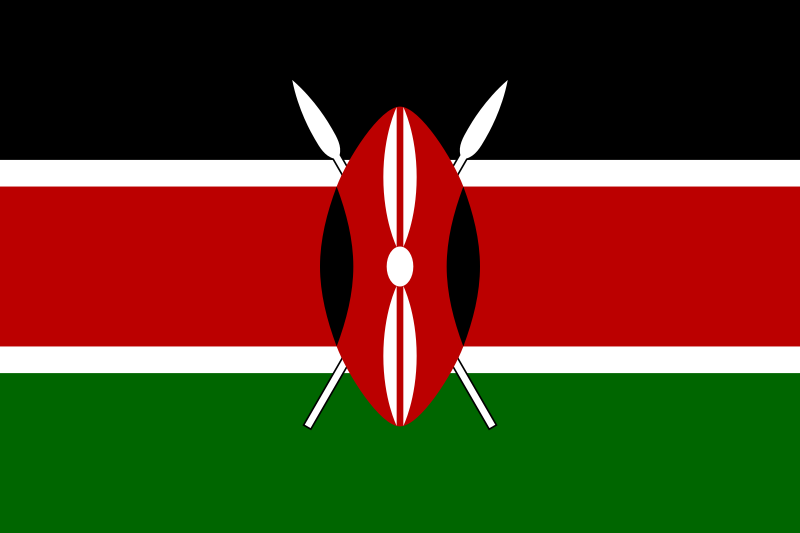
Over 486 people have died as a result of recent violence in Nairobi, Kenya following the disputed presidential elections, according to a government official.
The death toll was calculated by a special committee of humanitarian services created by the government to tour areas most affected by the violence.
In addition to the 486 dead, over 255,000 have been left homeless.
U.S. envoy Jendayi Frazer was to meet on Monday with Kenya's opposition leader, Raila Odinga, who has said that he is willing to share power with the government. He accuses the government of rigging the elections and also called for mass gatherings, which some consider to be responsible for the bloodshed.
Frazer had plans to meet with Odinga Monday morning, on the last day of a 3 day mission, accoring to T.J. Dowling, the US Envoy spokesperson.
Sunday, Odinga said that he would no longer demand that Kibaki resign and would consider sharing power. But he would only work through a mediator with enough power to negotiate an agreement that the international community could support.
Ghana's President, John Kufuor, current chairman of the African Union, is expected to arrive in Nairobi on Tuesday as well. Prime Minister Gordon Brown of Great Britain appeared on BBC television Sunday, asking that the two rivals hold talks to end the political deadlock.
The vote was only the second free election held in Kenya since independence was achieved in 1963.
Monday, January 7, 2008
Kenya Violence Continues

A week of post-election violence in Kenya has left 250,000 people homeless and over 300 dead. This is a surprising reality, given that the nation of known for being a safe haven for those fleeing war ravaged countries.
"I can't believe it. We're refugees in our own land," said Dan Mugambi, a 35-year-old teacher who was one of 15,000 people seeking shelter in a primary school compound in the North Rift Valley village of Kachibora. "This has never happened here before."
Kenya has turned chaotic after supporters of the opposition leader Raila Odinga accused President Mwai Kibaki of rigging the presidential election. The election was held on December 27.
Odinga blames Kibaki for the violence, claiming that he armed militant gangs in Nairobi slums to cause the chaotic violence after the elections.
It has also been reported that former UN Secretary General Kofi Annan has been called in to help find a solution to the violence.
The United States initially congratulated Kibaki for the election, but then retracted after the EU and Great Britain called the outcome into question. The only country on record for congratulating Kibaki is Uganda.
“You need to address the genesis of this violence,” Odinga said during interviews. “Most of this has been done by Munguki, the government has armed illegal terrorist organization called [Munguki] organization who started long before. They are responsible for killing people.”
Thursday, January 3, 2008
The Real Reason Behind the Congo Crisis

by
Maurice Carney, Executive Director, FOTC
Carrie Crawford, Chair, FOTC
info@friendsofthecongo.org
Over the past few months a lot of ink has flowed in mainstream publications about the situation in the Congo. In almost all of the articles, the underlying reason for the crisis in the Congo - the scramble for Congo's spectacular natural wealth- has been consistently omitted or underplayed. The front-page article in Thursday, December 13, 2007 New York Times entitled "After Clashes, Fear of War on Congo's Edge" by Lydia Polgreen is no exception. Not only were there key omissions, but also, a glaring factual error said volumes about the manner in which mainstream media covers Congo.
The error claimed that the 2006 Congolese elections "produced Congo's first democratically chosen government." Why is this inaccuracy so egregious even though to the casual reader it may seem like a minor oversight? Well, it obfuscates a narrative that is central in explaining why the crisis exists in the Congo and continues to date. Contrary to the New York Times front-page report, Congo's first democratic elections occurred in 1960 and led to the formation of the first post-independence government with Patrice Emery Lumumba as its prime minister. Within months of Lumumba's ascendancy to power, the West, mainly Belgium and the United States, induced their Congolese puppets to assassinate Patrice Lumumba who believed that the vast mineral wealth of the Congo should be used to benefit the Congolese people.1 Belgium apologized in 2002 for the assassination of Congo's first elected leader. However, it was not sufficient to assassinate Lumumba, the West then installed and sustained one of the main culprits in Lumumba's assassination, the brutal dictator Joseph Desire Mobutu, whom the West maintained in power for over 30 years. Whenever the Congolese people rose up to overthrow him, the West led by the United States rushed in to crush the aspirations of the people.
The current crisis is the latest eruption of the West's 120-year history of controlling Congo's enormous natural wealth at the expense of the Congolese people. Although there is a UN force in the Congo and the West spent $500 million to organize elections, they systematically sidelined the democratic forces in the country while providing Joseph Kabila with unconditional support.2 The pro-democracy forces called for national reconciliation and inclusion following the 1996 – 2002 war. They argued for a process that would lead to stability and justice for the people. However, it became quickly evident that the primary goal of the West who had never supported democracy in the Congo was to put in place a "reliable" person and a legal apparatus that would ratify the looting of the Congo by multi-national corporations. A 2007 ICG report states, "the U.S., Canada, South Africa and Belgium took the lead in seeking to control strategic reserves of copper, cobalt and other minerals and restrict China's access." 3The same report goes on to say that the focus on economic interests by Western diplomatic corps who supposedly was in the Congo to shepherd a democratic process was revealed with " the U.S. ambassador's public celebration of Phelps-Dodge's acquisition of the Tenke-Fungurume concessions in Katanga in August 2005 and the grandiose June 2006 ceremony in Kolwezi marking the reopening of the Kamoto mine, attended by Belgian, EU, Canadian, French, Angolan and even UN representatives."4
The $500 million investment in assuring Kabila's ascendancy to power was the beginning of the pay off for the West's investment. It is for this reason that many Congolese surmised that Kabila was summoned to Washington in October 2007 because he may have strayed from the game plan when he signed a $5 billion deal with China. Even as Kabila ventured to Washington, he first had to stop in Phoenix, Arizona to visit Tim Snider (recently replaced by Richard Adkerson,) CEO of Freeport-McMoRan Copper & Gold, formerly Phelps-Dodge, inheritors of what Global Witness called the world's richest copper mine, Tenke Fungurume. Global Witness also goes on to note that the deal is so odious that it resulted in Congo owning only 17.5% of its own resources and being in such position that it may even not get any profits from the deal.5 Nonetheless, the United States government agency, Overseas Private Investment Corporation (OPIC) has provided risk insurance for a $1 billion investment project by Freeport-McMoRan.
If there were any questions as to where the United States government stood on the review of mining contracts undertaken by the Congolese government, the risk insurance provided to Freeport-McMoRan should put all speculation to rest. In part due to pressure from civil society and international human rights groups, the Congolese government began reluctantly, in early 2007, a review of the mining contracts. The review process is finished but the Congolese government has yet to publish the results. The world has already got a glimpse of the significance of decisions made by Congo's leaders regarding mining deals in their country. In early November, a Congolese newspaper published what it claims to be the findings of the report, which called for renegotiation of the majority of the contracts and an outright cancellation of others. The result was the decline, on Exchanges from London to Toronto, of the stock prices of mining companies with interests in the Congo. Billions of dollars have been raised on the world Stock Exchanges to invest in mining operations in the Congo.
As a result of the high stakes in Congo's resources, the Congolese people are fighting against enormous odds. The die is literally being set now for a continued impoverishment of Congolese for several generations. The odious contracts will be in place for 30 to 40 years and will be backed by international law. The World Bank established the Mining and Forestry guidelines in the Congo as early as 2002. These guidelines were fixed on a neo-liberal model, which calls for the selling off of the country's wealth to private interests. Both codes facilitated and legalized the fleecing of the Congo. The World Bank has come under withering critique from groups like Greenpeace for allowing the Congo rainforest (known as the second lung of the earth) to be sold off to logging companies. Greenpeace International, Africa Forest Campaign Co-ordinator, Stephan van Praet said "These contracts are a shameful relic of colonial times. Millions of hectares of the Congo rainforest have been traded away by local communities to the logging industry for gifts like salt, machetes and crates of beer while logging companies and their taxes do next to nothing for local development."6
The Congolese landscape is replete with spectacular modern day heist backed by international institutions such as the World Bank and western governments, mainly the United States, England and Belgium, all at the expense of the tens of thousands of raped and brutalized Congolese women and millions of corpses.
As humanitarian groups seek resources to care for the sexually violated and brutalized women and children of the Congo, they should start with those companies that are lined up to purloin billions from Congo's wealth while 80 percent of Congolese live on less than 30 cents per day. Coexisting with the orgy of rapes and killing is what one corporate magnate calls a party. Gerhard Kemp of the Rand Merchant Bank, of Johannesburg, SA is quoted saying "The Congo is so rich in mineral wealth, you can't just ignore it. You don't want to be the last guy at this party."7
We may look at what is taking place in the Congo and cringe or cover our eyes but the unsightly picture that is often left out or obfuscated, especially by the mainstream media, is the significant role of the corporations that provide us with our cell phones, game consoles, lap tops and other modern technological devices which benefit from Congo's woes.
The New York Times, Washington Post, Chicago Tribune, Ms. Magazine, Huffington Post, and Glamour Magazine, all have published reports of atrocities in the Congo in recent months but none get to the crux of the issue and almost all obfuscate the problem instead of adding clarity that may lead to prescriptions that will benefit the people of the Congo and result in a lasting resolution of the crisis. The central issue is only touched upon tangentially or in passing.
We cannot genuinely weep for the Congo or lament the rapes and killings, yet remain silent about those profiting from the atrocities. Corporate pilfering influences everything that happens in dramatic ways in the Congo. The conflict resulting in brutal rapes and ghastly killings are inextricably linked to the looting of the Congo. Noble laureate Wangari Maathai is instructive in this case when she says, "These wars when you look at them, they are all about resources and who is going to control them."8
In the end, not only will the Congolese people have to endure enormous suffering from the wounds of war and instability but when things finally settle down, they will come to realize that not only their women have been brutally violated due to a climate of impunity but the entire country would have been raped of its wealth.
By only telling the part of the tragedy and savagery in the Congo that is consistent with our preconceived notion of the "savage," "depraved" African, the leading media institutions of the west are complicit in one of the most well documented resource heist of the 20th century and which persists at the dawn of the 21st century. We can hear the echoes of Joseph Conrad's "the horror, the horror."
A lot of the blame for the persistent climate of conflict is often laid on the Hutu militia who fled Rwanda in 1994 pursuant to the genocide in that country. In fact this is just a part of the story, which does not give a complete picture. It is instructive to note that, for all intents and purposes, Rwanda controlled the east of the Congo from 1996 – 2002, a period in which they claimed to be in hot pursuit of the Hutu genocidaires known as the Interhamwe. However during that period, Rwanda's most noted military clash was with Uganda inside the Congo. The source of the clash was over who would control vast diamond concessions in Kinsangi hundreds of miles away from where the dreaded Hutu genocidaires were situated. Hence, although the Hutu presence in the Congo is an issue, it falls far short of explaining the source of the violence and crimes in the Congo.
Rebel leader Laurent Nkunda and his rebel forces, currently the source of the bulk of the unrest and suffering in the East of the country and who for all intents and purposes is a proxy of Rwanda, are using the Hutu argument as a justification for the havoc they are wreaking on the Congolese people. This argument was not sustainable when made by Rwanda itself and is even less convincing when made now by its proxy Nkunda. Instead of pledging military advisers to Kabila, the United States has a golden opportunity to play a constructive role, mainly by placing pressure on Rwanda to stop its support of Nkunda and disabuse itself of any notion of invading Congo for a third time. The whole idea of Rwanda "pledging restraint" is preposterous. The path to peace in the East of the Congo starts in Kigali.
Key Sources of the Conflict:
1. Clients of the West such as Paul Kagame of Rwanda and Yoweri Museveni of Uganda who serve as lifelines for rebel groups in the Congo
2. Congolese elites who serve as sycophants for western interests while using militia to terrorize the Congolese people
3. Western Governments
4. Multilateral institutions such as the World Bank who set the legal framework for the looting of the Congo's wealth
5. Multi-national corporations who are to quick to super-exploit the Congo all in the name of business and at the expense of the people
Constructive International Engagement:
1. Pressure Rwanda to stop supporting its rebel proxies in the Congo
2. Encourage Rwanda to create democratic space for the Hutu to return
3. Promote reconciliation and justice in the Congo
4. Call for and support the genuine inclusion of the democratic forces in the Congo
5. Support a democratic process and not just power elites who are too quick to mortgage the country's wealth and the future of the sons and daughters of the Congo to mining and forestry multi-nationals
Should the global community play a constructive role in the Congo, the Congolese people will take care of the rest and produce leaders who represent their interests by bringing reconciliation, justice and prosperity to this vital country in the heart of Africa.
Notes:
1. Ludo De Witte's The Assassination of Lumumba
2. International Crisis Group, Congo Consolidating the Peace, Africa Report No. 128, July 5, 2007
3. Ibid.
4. Ibid.
5. Global Witness, "Digging in Corruption: Fraud, Abuse and Exploitation in Katanga's Copper and Cobalt Mines," July 2006, p. 36-37
6. http://www.greenpeace.org/international/press/
releases/congo-report
7. Global Witness, "Digging in Corruption: Fraud, Abuse and Exploitation in Katanga's Copper and Cobalt Mines," July 2006, p. 34
8. Interview, Democracy Now with Amy Goodman http://www.democracynow.org/2007/10/1/
unbowed_nobel_peace_laureate_wangari_maathai
--
Become a Friend of the Congo
Ph: 1-888-584-6510
http://friendsofthecongo.org/action/index.php
Osama Bin Laden is Dead, According to Bhutto
In this shocking video, Benazir Bhutto, the Pakistani leader who was recently assassinated, casually mentions "the man who murdered Osama Bin Laden." This is shocking for obvious reasons, given that we are still looking for him.
So, the question now becomes....why are we looking for someone who has been murdered? Bhutto is a credible source, and it's odd that no one in the Bush administration thought to ask someone in Bhutto's camp if Bin Laden was still roaming the earth. Given the respect our country has for this woman, it would seem that we would talk to her about such an important issue.
What the hell is going on?
Wednesday, December 31, 1969
Subscribe to:
Posts (Atom)
